
Table of Contents
August’s full sturgeon moon will share the night sky with a dramatic partial lunar eclipse, as Earth’s shadow covers nearly the entire visible surface of the Moon. The celestial event will offer sky-watchers across much of the Americas an impressive opportunity to observe the changing lunar landscape.
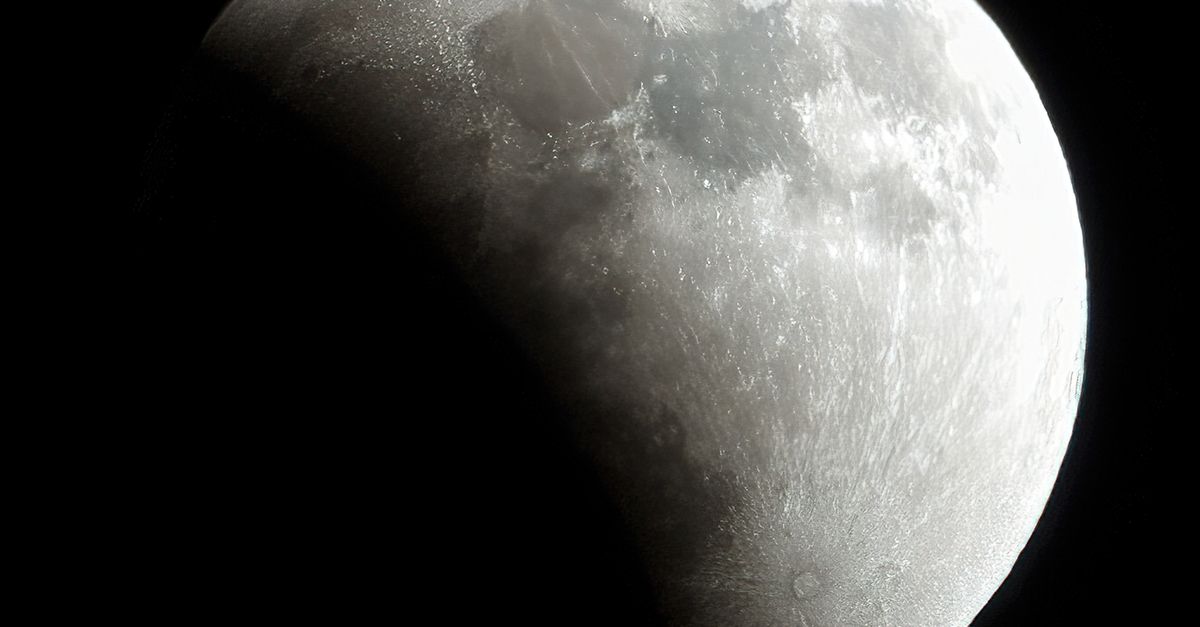
The end of August will bring more than an ordinary full moon. The annual sturgeon moon will coincide with a major partial lunar eclipse, creating one of the most striking astronomical displays of the month. Although the event will technically be classified as a partial eclipse, the Moon will come remarkably close to total coverage, with approximately 96% of its bright, visible surface passing into Earth’s darkest shadow.
For people interested in astronomy, as well as casual observers who simply enjoy looking at the night sky, the event will provide an accessible opportunity to witness the interaction between the Sun, Earth and Moon. Large areas of North and South America are expected to have the chance to see most or all of the eclipse, depending on local weather conditions and the visibility of the night sky.
How the partial lunar eclipse will happen
A lunar eclipse occurs when the Earth moves directly between the Sun and the Moon. In this position, the planet blocks sunlight that would normally illuminate the lunar surface and casts its shadow across the Moon.
The darkest central portion of Earth’s shadow is known as the umbra. When the entire Moon passes through this region, observers witness a total lunar eclipse. If only part of the Moon enters the umbra while another section remains outside it, the event is classified as a partial lunar eclipse.
That is what will happen during the August event. However, this particular eclipse will be unusually extensive because Earth’s shadow will cover about 96% of the Moon’s illuminated surface. As a result, the visual difference between this event and a total eclipse may appear relatively small to some observers.
Lunar eclipses can only take place during a full moon since the Earth needs to be located right between the Sun and its natural satellite. Even so, a lunar eclipse does not happen every single month. The orbit of the Moon is inclined relative to Earth’s trajectory around the Sun, meaning that the three celestial bodies fail to reach the required alignment during each full moon.
The eclipse is expected to begin late Thursday evening and reach its maximum shortly after midnight in the Eastern Time zone. The precise moment when the Moon appears fullest will follow only a few minutes later, making the two astronomical events nearly simultaneous.
For watchers positioned in optimal areas throughout the Americas, the nocturnal schedule ought to simplify observing the event while the shadow of Earth slowly advances across the face of the Moon.
Will the Moon turn red or orange?
One of the most identifiable characteristics of a lunar eclipse is the potential for the Moon to acquire crimson or orange hues.
During a total lunar eclipse, the Moon can sometimes appear deep red, copper-colored or orange. This phenomenon is often referred to as a “blood moon,” although the name is a popular description rather than a scientific term.
The changing color is caused by Earth’s atmosphere. As sunlight travels around the edges of the planet, shorter wavelengths associated with blue and violet light are scattered more easily. Longer wavelengths, including red and orange light, are more likely to continue through the atmosphere and can eventually reach the Moon.
Because this event will be a near-total partial eclipse rather than a complete one, its exact appearance will be difficult to predict in advance.
The portion of the Moon deepest within Earth’s shadow could become noticeably darker and may develop reddish tones, particularly in areas farthest from the remaining illuminated section. Atmospheric conditions can influence how intense those colors become.
This uncertainty is part of what makes lunar eclipses visually interesting. No two events appear exactly the same, and the Moon’s colors can vary according to conditions in Earth’s atmosphere.
The night could potentially offer additional astronomical interest as geomagnetic activity may also create conditions favorable for auroras in parts of the northern United States. Although auroras and lunar eclipses are separate phenomena, the possibility of both occurring during the same period could make the night particularly memorable for sky-watchers in certain regions.
How frequently do lunar eclipses take place?
Lunar eclipses are not exceptionally rare, but they do not occur with the same frequency every year.
The number of lunar eclipses varies depending on the orbital alignment of the Earth, Moon and Sun. Many years offer two opportunities to observe a lunar eclipse, while some years can include three. In other cases, the number of visible eclipses from particular locations may be more limited.
Earlier in 2026, another lunar eclipse occurred in March. That event was a total lunar eclipse, with some of the best viewing conditions occurring across Australia and parts of the Pacific region.
Each eclipse is different. Some are total, while others are partial or penumbral. Their duration, appearance and visibility also depend on the location of the observer and the exact geometry of the celestial alignment.
The August eclipse will stand out because a vast portion of the Moon is set to enter Earth’s umbra. Since roughly 96% of the visible lunar surface will be affected, this event is bound to rank as a notably dramatic instance of a partial lunar eclipse.
How to watch the lunar eclipse
One of the advantages of a lunar eclipse is that it can be observed safely without specialized protective equipment.
Unlike a solar eclipse, which demands adequate eye protection while observing the Sun, a lunar eclipse can be viewed safely with the naked eye. No specialized glasses or filters are required.
Still, selecting the ideal spot can greatly enhance the overall experience.
Bright streetlights, buildings and other sources of artificial illumination can make it more difficult to appreciate the details of the night sky. An open area away from strong city lights is generally the best choice.
An adjacent park, a tranquil open field, or an alternative spot offering an unhindered view of the firmament can yield superior conditions. Furthermore, it is beneficial to steer clear of areas where lofty structures or foliage might obstruct the Moon.
Binoculars are not required, but they can make the gradual movement of Earth’s shadow easier to observe. A telescope can reveal additional details on the lunar surface, although the eclipse itself will remain clearly visible without any equipment.
Weather will ultimately play an important role. Even in regions where the eclipse is fully visible, cloud cover could prevent observers from seeing the Moon. Checking the local forecast before heading outside can help determine the best viewing conditions.
The gathering furthermore delivers a chance to simply take in the sky. The metamorphosis is going to unfold little by little, enabling spectators to track the evolving look of the Moon instead of just catching a fleeting instant.
Why August’s full moon is called the sturgeon moon
The full moon in August is widely known as the sturgeon moon, a name connected to Indigenous traditions in North America.
The designation is particularly associated with Algonquin-speaking peoples and other Native American communities living near the Great Lakes. During this period of the year, lake sturgeon were historically abundant and represented an important food source.
Like numerous traditional full moon monikers, the expression mirrors seasonal shifts alongside the connection joining communities with the natural world.
However, the sturgeon moon is not the only name used for August’s full moon. Different Indigenous communities developed their own names based on the plants, animals and seasonal events that were most important in their regions.
Some Indigenous groups associated the August moon with black cherries, while others connected it to the period when green corn was growing or being harvested.
These designations serve as a reminder that the Moon has historically functioned as more than merely an object for scientific study. For ages, lunar phases remained closely tied to seasonal customs, sustenance sources, and the cadences of daily existence.
More full moons to come in 2026
The astronomical calendar will keep presenting multiple full moons following the August sturgeon moon.
September will bring the harvest moon, followed by October’s hunter’s moon. November will feature the beaver moon, while December’s full moon is traditionally known as the cold moon.
The final months of the year will also bring additional interest because the full moons in November and December are expected to occur under conditions associated with supermoons.
A supermoon takes place when a full moon occurs while the Moon is near one of the closest points to Earth in its elliptical orbit. From the ground, the Moon may appear somewhat larger and brighter than usual.
Although the distinction might not invariably be apparent without a direct comparison, supermoons continue to stand out as some of the most sought-after astronomical occurrences among astronomy enthusiasts and photographers alike.
The August lunar eclipse will nevertheless be one of the year’s more distinctive opportunities to observe the Moon. The combination of a full sturgeon moon and a partial eclipse covering almost the entire lunar surface will transform an ordinary night into a visible demonstration of the movements of the Earth, Moon and Sun.
For individuals residing in regions with favorable visibility, simply having an unobstructed sky and a clear upward vantage point is all that is required. As the shadow of Earth gradually creeps across the lunar surface, onlookers get to witness a cosmic alignment that highlights the extraordinary accuracy of our solar system.
With no special equipment required, the near-total partial lunar eclipse will be accessible to anyone willing to step outside and look toward the night sky. Whether viewed through binoculars, a telescope or simply with the naked eye, the event will offer a reminder that some of the most impressive astronomical phenomena can be experienced directly from Earth.