Our website uses cookies to enhance and personalize your experience and to display advertisements (if any). Our website may also include third party cookies such as Google Adsense, Google Analytics, Youtube. By using the website, you consent to the use of cookies. We have updated our Privacy Policy. Please click the button to view our Privacy Policy.

Science and Technology

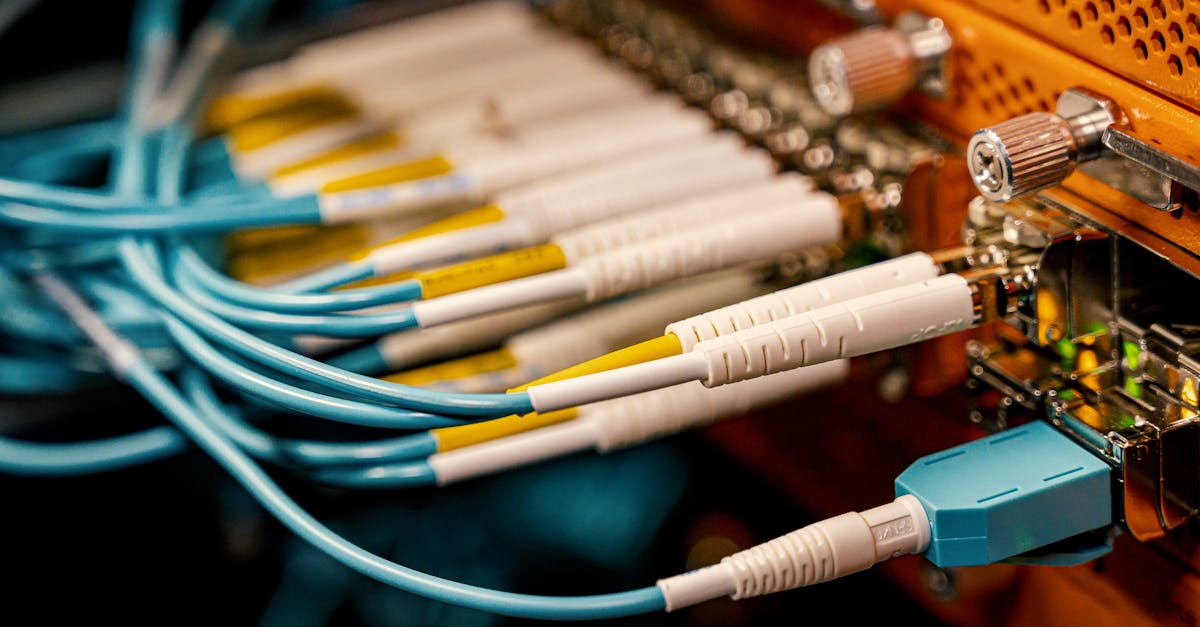
The pioneering technologies that made the internet possible

1. The Telegraph and Early Digital SignalingThe conceptual origins of the internet extend back to the telegraph of the 19th century. Through the conversion of language into electrical pulses sent across wires, the telegraph pioneered the concept of encoding information into distinct signals. The system created by Samuel Morse proved that data could move independently of physical transport. This abstraction—information detached from its medium—ultimately laid the groundwork for all digital communication.2. Telephone Networks and Circuit SwitchingScalable network architecture was introduced by the worldwide telephone system. A dedicated connection could be set up between two callers for the entire duration of…

Read more
The impact of penicillin on reducing battlefield mortality in World War II

The impact of penicillin on reducing battlefield mortality in World War II

1. Penicillin: The Antibiotic That Changed the Course of HistoryPenicillin, discovered by Alexander Fleming in 1928 and developed for clinical use in the 1940s, marked the beginning of the antibiotic era. Before its introduction, bacterial infections such as pneumonia, syphilis, and wound sepsis were often fatal. During World War II, mass production of penicillin reduced battlefield mortality dramatically. By targeting bacterial cell wall synthesis, it offered selective toxicity—killing bacteria without harming human cells. Its success spurred the search for dozens of other antimicrobial agents and permanently shifted medicine from supportive care to curative intervention.2. Streptomycin: The Initial Successful Remedy against…
Read more
How telephone networks contributed to the creation of internet infrastructure

How telephone networks contributed to the creation of internet infrastructure

1. The Telegraph and Early Digital SignalingThe conceptual roots of the internet trace back to the 19th-century telegraph. By converting language into electrical pulses transmitted over wires, the telegraph introduced the idea of encoding information into discrete signals. Samuel Morse’s system demonstrated that data could travel independently of physical transport. This abstraction—information separated from its medium—became foundational for all digital communication.2. Telephone Networks and Circuit SwitchingScalable network architecture was introduced by the worldwide telephone system. A dedicated connection could be set up between two callers for the entire duration of a call through circuit switching. Although data networks eventually transitioned…
Read more
How international projects like the ISS expand human knowledge

How international projects like the ISS expand human knowledge

1. The Large Hadron Collider (LHC)The Large Hadron Collider at CERN near Geneva is the world’s most powerful particle accelerator. Spanning 27 kilometers beneath the French-Swiss border, it accelerates protons to near the speed of light and collides them to recreate conditions that existed fractions of a second after the Big Bang. In 2012, experiments at the LHC confirmed the existence of the Higgs boson, a fundamental particle that explains why other particles have mass. The project involves more than 10,000 scientists and engineers from over 100 countries, making it one of the largest scientific collaborations ever assembled. Beyond particle…
Read more
How data storage evolved from punch cards to modern digital systems

How data storage evolved from punch cards to modern digital systems

Data storage has evolved from rigid cardboard punch cards to globally distributed, software-defined systems capable of storing zettabytes of information. Each breakthrough has reshaped computing, business, and daily life. Below are the twelve most significant advances in data storage since the era of punch cards, presented in chronological and technological progression.1. Magnetic Tape: The First Scalable Digital StorageDuring the 1950s, magnetic tape made its debut as the initial viable substitute for punch cards. Rather than relying on physical perforations in paper, this medium retained information by magnetizing particles along a plastic film.Key impact:Enabled sequential storage of large datasets.Reduced physical storage…
Read more
Why haptics improves the realism of mixed reality systems

Why haptics improves the realism of mixed reality systems

Understanding Haptics and Immersive ComputingHaptics refers to technologies that create tactile sensations through touch, force, vibration, or motion. Immersive computing includes virtual reality, augmented reality, mixed reality, and spatial computing systems that aim to blend digital content with human perception. When haptics innovation is integrated into immersive computing, digital experiences move beyond sight and sound to engage the sense of touch, making interactions feel more real, intuitive, and meaningful.Why Touch Is Critical to ImmersionHuman perception relies heavily on touch to understand the physical world. Vision and hearing can suggest presence, but touch confirms it. Without haptics, immersive environments often feel…
Read more
The contributions of Rosalind Franklin and Lise Meitner to modern science

The contributions of Rosalind Franklin and Lise Meitner to modern science

1. Rosalind Franklin (1920–1958)Field: Molecular Biology and X-ray Crystallography Rosalind Franklin’s precise X-ray diffraction images of DNA, particularly the famous Photograph 51, provided critical evidence that DNA has a double-helix structure. Her data were shown without her permission to James Watson and Francis Crick, who used the information to build their model of DNA in 1953. Watson, Crick, and Maurice Wilkins received the 1962 Nobel Prize in Physiology or Medicine; Franklin, who had died four years earlier, was not recognized. Her case remains one of the most cited examples of gender bias in twentieth-century science, highlighting how access to data…
Read more
August’s sturgeon moon will share the sky with a nearly total partial lunar eclipse

August’s sturgeon moon will share the sky with a nearly total partial lunar eclipse

August’s full sturgeon moon will share the night sky with a dramatic partial lunar eclipse, as Earth’s shadow covers nearly the entire visible surface of the Moon. The celestial event will offer sky-watchers across much of the Americas an impressive opportunity to observe the changing lunar landscape.The end of August will bring more than an ordinary full moon. The annual sturgeon moon will coincide with a major partial lunar eclipse, creating one of the most striking astronomical displays of the month. Although the event will technically be classified as a partial eclipse, the Moon will come remarkably close to total…
Read more
The most hazardous volcanoes under constant observation with significant human exposure

The most hazardous volcanoes under constant observation with significant human exposure

Understanding Volcanic Risk in the Modern WorldVolcanoes rank among the most formidable natural systems on Earth. Although numerous eruptions remain moderate and are closely monitored, certain volcanoes merge high eruptive potential with heavily populated surroundings, volatile magma networks, or past records of devastating blasts. Such peaks are deemed particularly perilous, driven as much by the sheer magnitude of human exposure as by their inherent geological traits.Below are ten of the most dangerous actively monitored volcanoes on the planet, selected based on eruptive history, magma composition, explosivity, monitoring assessments, and nearby population density.1. Mount Vesuvius (Italy)Type: Stratovolcano Last major eruption: 1944…
Read more
The medical breakthrough of ether anesthesia at Massachusetts General Hospital

The medical breakthrough of ether anesthesia at Massachusetts General Hospital

1. The First Successful Use of Ether Anesthesia (1846)Before the mid-nineteenth century, surgery was a brutal, last-resort intervention performed at lightning speed to minimize agony. On October 16, 1846, at Massachusetts General Hospital, dentist William T. G. Morton publicly demonstrated the use of ether anesthesia during the removal of a neck tumor. The patient reportedly felt no pain.This single operation transformed medicine. Surgeons could now operate deliberately rather than desperately. Mortality rates dropped as procedures became more precise, and entirely new specialties—such as abdominal and thoracic surgery—emerged. Modern anesthesiology, patient monitoring systems, and critical care medicine trace their origins to…
Read more