

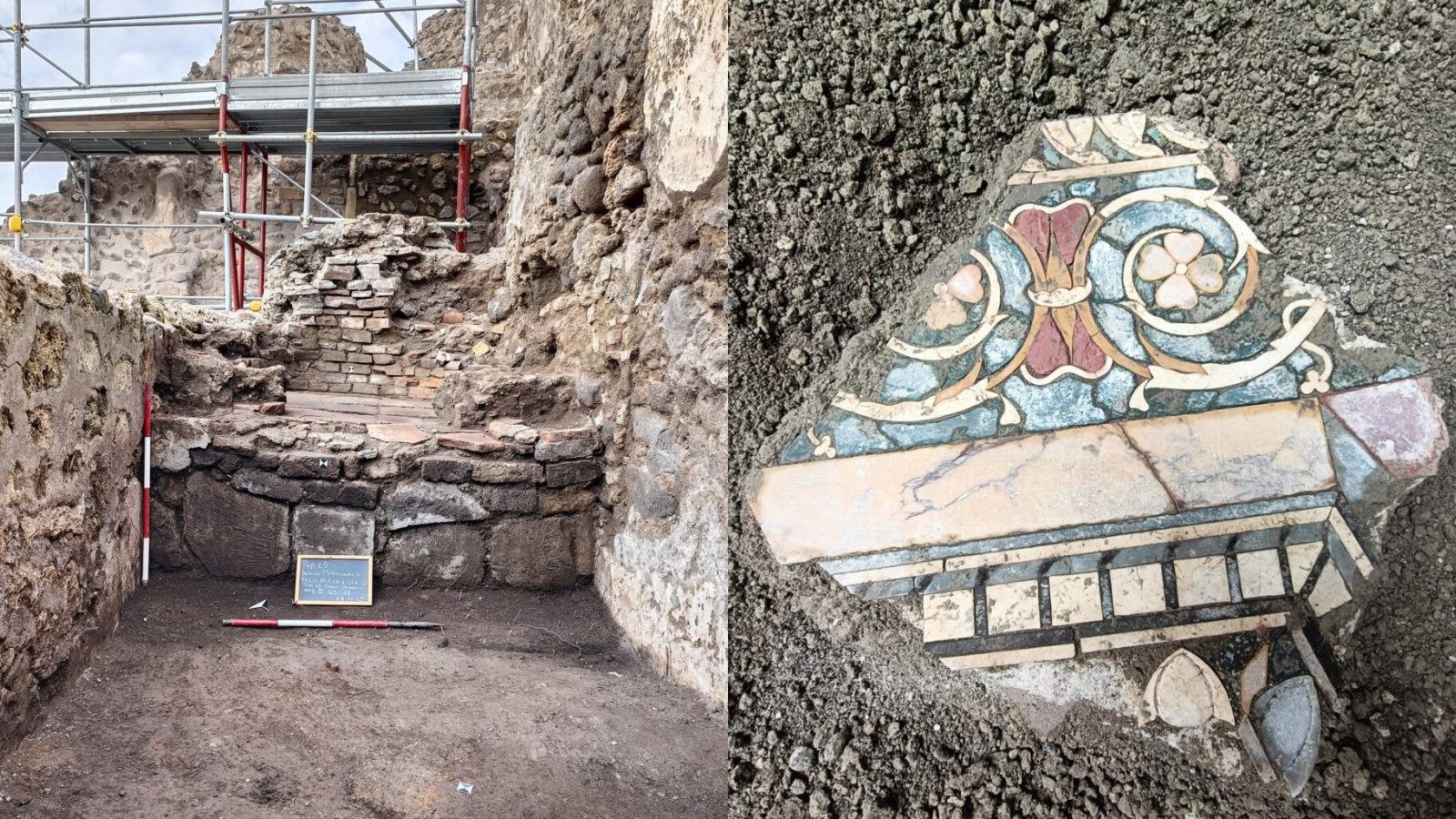
Recent archaeological findings in Pompeii have revealed a remarkable and previously under-examined aspect of the ancient city’s history: people returned to the site after the devastating eruption of Mount Vesuvius in A.D. 79. This new evidence challenges the long-held belief that Pompeii was immediately and permanently abandoned, offering a more nuanced picture of the tragedy’s aftermath. These discoveries suggest that survivors, and possibly even looters, returned to the buried city to recover valuables, salvage materials, and perhaps mourn their lost loved ones, demonstrating a powerful human connection to the place even in its destruction.
The new excavations, conducted in a previously unexplored section of the city, unearthed traces of human activity that took place in the years and even decades after the cataclysmic event. Archaeologists discovered holes in walls and floors, which appear to have been made by people searching for buried items. They also found signs of organized digging, including tunnels and shafts, that were clearly not a part of the initial eruption. These findings suggest that the survivors, who had a detailed knowledge of the city’s layout, were able to pinpoint the locations of their homes and businesses in an effort to reclaim their possessions. This effort was a testament to their resilience and their reluctance to abandon everything they once held dear.
The process of returning to the buried city was fraught with danger. The landscape was drastically altered, and the air was still filled with ash and volcanic gas. The survivors, or “scavengers” as some archaeologists call them, would have had to contend with the unstable ground and the constant threat of aftershocks. Yet, they were driven by a powerful motive: the need to reclaim their heritage. This wasn’t just about money; it was about recovering family heirlooms, religious artifacts, and other items of sentimental value. The act of returning to Pompeii was, in a sense, a final act of defiance against the natural disaster that had taken so much from them.
The discovery of these post-eruption activities also provides a new perspective on the archaeological record of Pompeii. Previously, many of the empty spaces or missing items in the ruins were attributed to the initial looting that occurred shortly after the eruption. The new findings, however, suggest a more sustained and deliberate effort to salvage the city. This forces archaeologists to re-evaluate their understanding of the site’s history and to look for further evidence of this post-eruption activity. It is a reminder that the story of Pompeii is not just about its sudden destruction, but also about its long, slow process of being forgotten and rediscovered.
This new evidence of a post-eruption presence in Pompeii highlights a universal human trait: the desire to return to a place of significance, even after a disaster. This is not just a story of ancient history; it is a story that resonates with us today.
Whether individuals are coming back to their homes after a hurricane or a conflict, or revisiting a site of personal sorrow, the desire to reconnect with the past is strong. The inhabitants of Pompeii were similar; they were individuals who, despite all odds, couldn’t entirely release the world they had left behind. Their behavior offers a touching and humanizing view into the actual consequences of the A.D. 79 eruption.


