

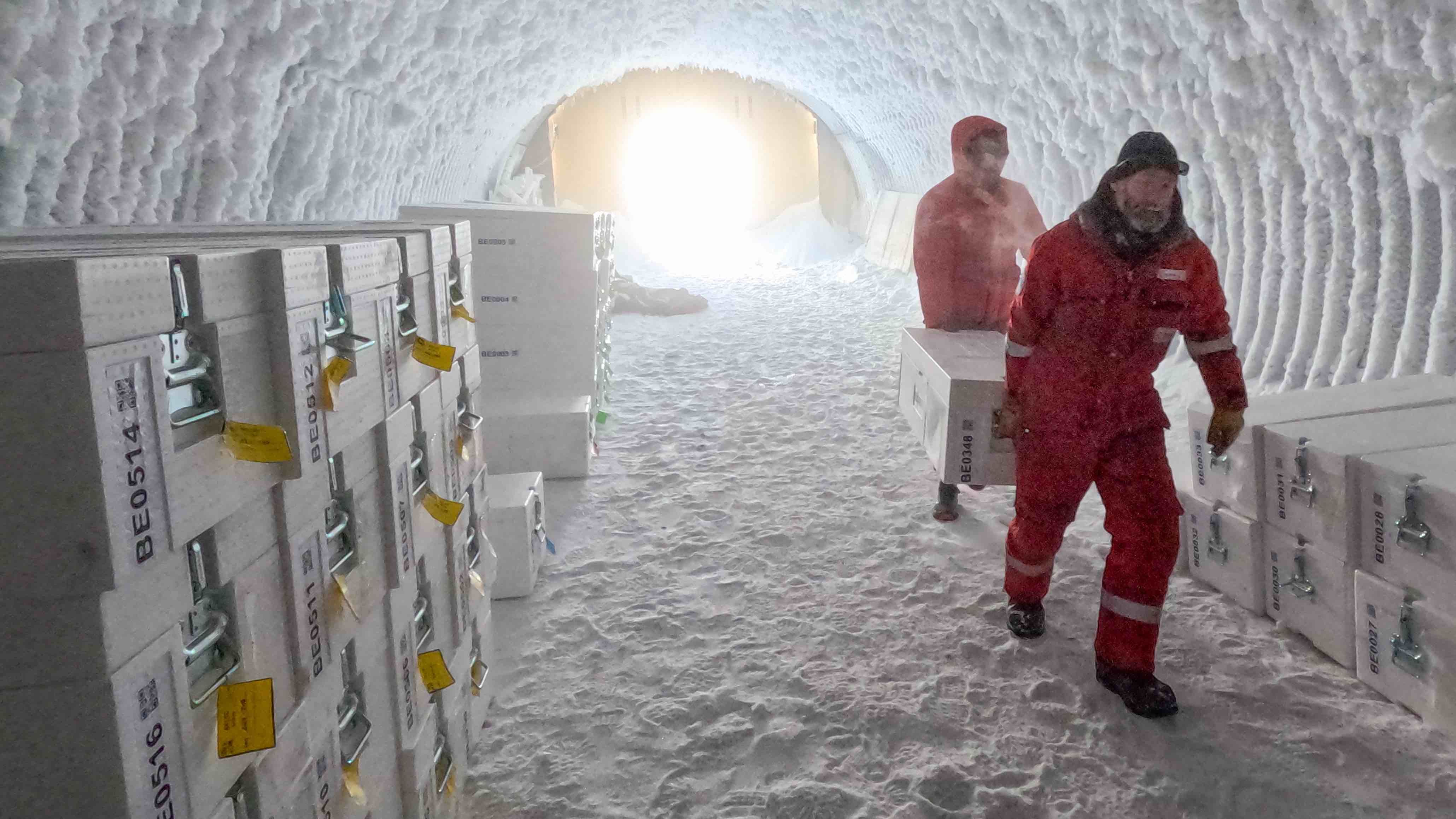
A unique specimen of ice, estimated to be 1.5 million years old, has been retrieved from Antarctica and will soon be melted—not to be discarded but to serve in a pioneering scientific project. This mission aims to reveal hidden insights about Earth’s prehistoric climate, potentially providing a more comprehensive view of atmospheric changes over history and aiding scientists in comprehending the speed and effects of today’s climate change patterns.
The ice, carefully drilled from deep beneath the Antarctic surface, is believed to contain trapped air bubbles from an era long before humans walked the Earth. These frozen air pockets serve as time capsules, preserving traces of the atmosphere from a period that predates modern civilization by more than a million years.
Melting the ice in a controlled lab environment allows scientists to extract and analyze the gases contained in those bubbles. Chief among their interests is carbon dioxide—a greenhouse gas that plays a critical role in Earth’s temperature regulation. By measuring past concentrations of CO₂ and comparing them with current levels, researchers can map the historical fluctuations of Earth’s climate and gain insights into natural climate cycles, including glacial and interglacial periods.
What makes this ice sample particularly important is its antiquity. Most of the ice cores examined by climate experts date back nearly 800,000 years. This newly extracted core nearly doubles that time span, providing a unique chance to explore the atmospheric conditions of an era that has been mostly unreachable to contemporary science until now.
The process of extracting and preserving the ice involved a sophisticated logistical plan, executed in extremely remote and challenging regions of the planet. Advanced drilling tools were employed to penetrate over two kilometers beneath the Antarctic surface, where the old ice lay hidden beneath numerous layers of newer snow and ice. After being retrieved, the ice was maintained in a frozen state during transportation and preserved under strict temperature regulations to avoid any contamination or degradation.
With the sample now at the research facilities, the subsequent phase includes methodically thawing portions of the ice under strictly controlled settings. This process enables researchers to separate the gases and isotopes inside, which can afterwards be analyzed with cutting-edge analytical instruments.
The broader objective of the research is to improve climate models and refine predictions about future environmental changes. Understanding how carbon levels and global temperatures evolved over the course of more than a million years could shed light on how today’s anthropogenic emissions might reshape the planet in the coming centuries.
Esta investigación también tiene repercusiones en otras áreas, como la geología, la oceanografía e incluso la biología evolutiva. Las alteraciones en el clima del planeta han provocado históricamente modificaciones en los ecosistemas, los niveles del mar y los patrones climáticos, lo que a su vez ha impactado el desarrollo de la vida en la Tierra. Al examinar tales muestras ancestrales, los científicos aspiran a descubrir más sobre cómo los cambios climáticos del pasado influyeron en la biosfera de la Tierra, y qué podría implicar eso para la vida en el futuro.
The results from this project aim to add to the increasing collection of data utilized by the worldwide scientific community to support enhanced climate action. By providing insight into the Earth’s ancient history, this melted ice may guide future decision-making processes.


