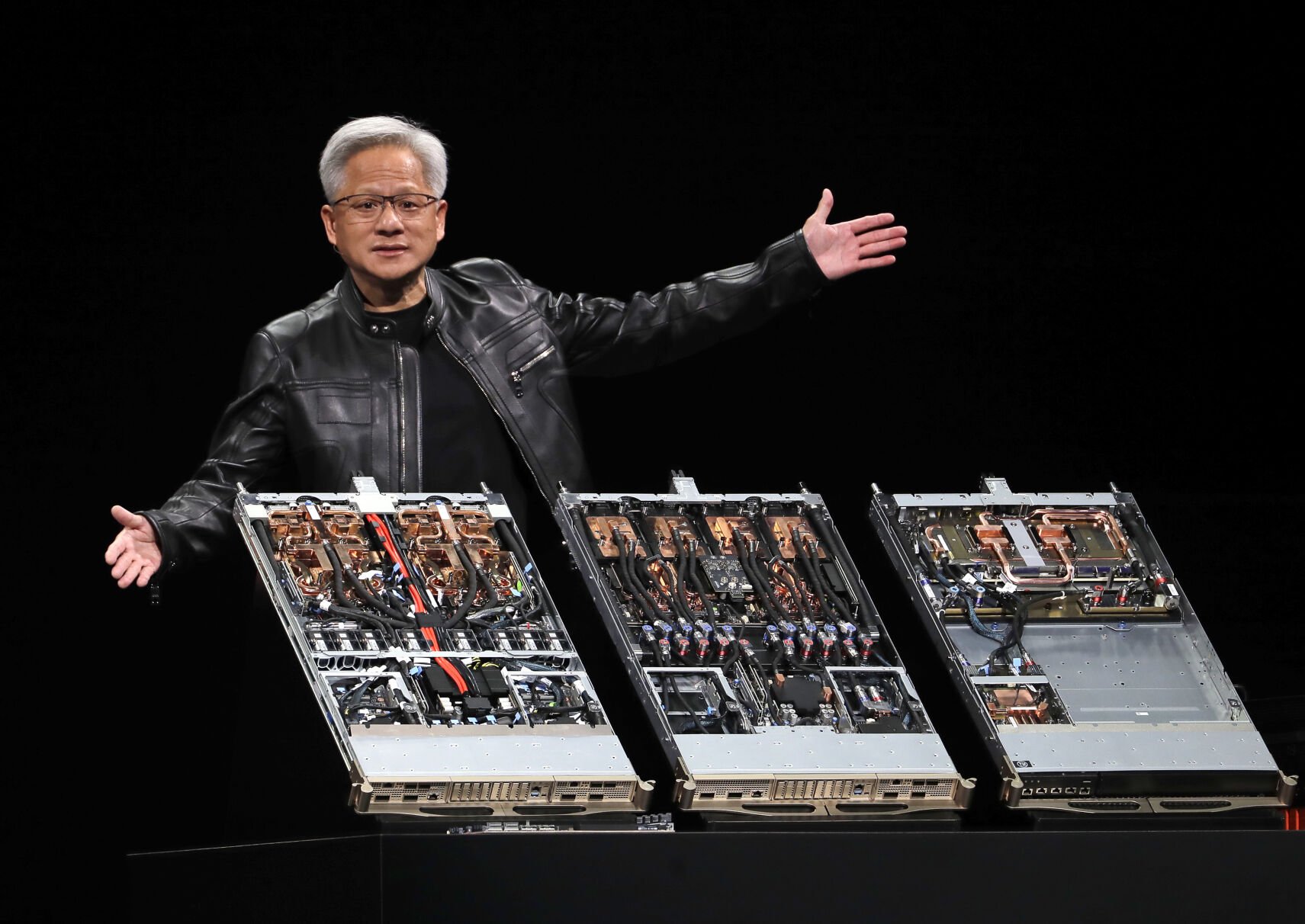
Nvidia is getting ready to bring back its H20 artificial intelligence (AI) chip to the Chinese market after securing the required approvals from the U.S. government. This decision comes after several months of uncertainty for the tech giant, which had temporarily halted the delivery of some AI chips to China due to changing export regulations imposed by Washington.
The H20 chip, part of Nvidia’s Hopper architecture and specifically designed to align with U.S. trade guidelines, represents the company’s strategic response to limitations placed on high-performance semiconductors destined for China. These restrictions were part of broader efforts by the U.S. to control the flow of advanced AI technologies that could have military or strategic applications. As a result, Nvidia had to revise its chip designs and introduce versions like the H20 with reduced performance to comply with regulatory requirements.
The refreshed authorization now permits Nvidia to continue transactions and deliveries of the H20 chip in China, an essential market for the firm’s future expansion. China accounts for a considerable share of worldwide demand for AI computing equipment, with cloud service providers, research organizations, and technology companies in need of robust GPUs for tasks like machine learning, data analysis, and applications involving generative AI.
Nvidia announced that it plans to start shipping “in the near future,” indicating a careful yet determined direction for its activities in the area. The company’s representative highlighted that the recommenced sales adhere entirely to the existing export regulations, which specify the top levels of computing capability and interconnect velocity that AI chips are allowed to provide to clients in particular nations, such as China.
This announcement comes amid ongoing geopolitical tensions between the U.S. and China, particularly in areas related to technology, trade, and national security. In recent years, Washington has introduced a series of export restrictions aimed at limiting China’s access to cutting-edge semiconductor technologies. These policies have placed pressure on U.S. chipmakers like Nvidia, AMD, and Intel, requiring them to redesign or withhold certain products from Chinese clients.
Nvidia demonstrates its flexibility and dedication to staying connected to one of the globe’s most significant technology markets by maneuvering through these limitations. By modifying the H20 chip to adhere to regulations while retaining its useful performance features, Nvidia strives to fulfill market needs without breaching legal requirements.
Industry analysts note that the H20 chip, though less powerful than Nvidia’s flagship AI processors such as the A100 or H100, still offers robust capabilities for many enterprise-level workloads. Chinese companies, particularly cloud computing platforms and AI startups, are expected to use the H20 to support applications in natural language processing, image recognition, and autonomous systems, among others.
There are also discussions suggesting that Nvidia’s strategy for compliant chip creation might become an example for other semiconductor companies aiming to maintain their global operations amidst stricter regulations. By collaborating with government bodies and following compliance guidelines, firms can reduce risks and protect their income sources in important international markets.
At the same time, some industry observers caution that the regulatory landscape remains fluid. Future policy shifts could further restrict chip exports or introduce new layers of complexity for companies operating across borders. For now, however, Nvidia’s resumption of H20 sales to China is seen as a positive signal for its presence in Asia and a stabilizing move in an otherwise uncertain environment.
Nvidia’s strong position in the AI hardware market has made it a focal point in discussions about the global semiconductor supply chain and technological competition. The company’s GPUs are considered foundational to the current wave of AI development, powering everything from advanced research projects to commercial AI applications. As such, decisions about where and how its chips are sold carry implications not only for Nvidia’s bottom line but also for the broader strategic balance in the global tech landscape.
The return of H20 chip sales to China could also influence purchasing strategies among Chinese firms, many of which have been exploring alternative suppliers or investing in domestic chip development in response to export restrictions. Nvidia’s re-entry may temporarily ease those pressures, but the long-term trend toward technological self-reliance in China is likely to continue, supported by government initiatives and private sector investment.
In contrast, Nvidia is broadening its product range beyond just hardware. The organization has been channeling more resources into software platforms, AI frameworks, and cloud services, with the objective of creating a complete ecosystem that facilitates AI growth in various sectors. This varied approach could offer extra stability against potential regulatory shifts and market variations.
Nvidia’s upcoming restart of H20 AI chip sales in China showcases its strategic flexibility and ongoing significance in the global AI infrastructure arena. Although abiding by regulations presents a primary hurdle, the company’s active response to trade limitations illustrates how major tech companies can adapt to evolving geopolitical landscapes without losing their market standing. This developing scenario will continue to be a focal point for policymakers, competitors, and investors observing the interplay of AI, international commerce, and national defense.