

Table of Contents
- 10 upcoming innovations poised to revolutionize our daily existence by 2030
- 1. Artificial intelligence agents
- 2. More capable robots
- 3. Autonomous vehicles and delivery systems
- 4. Gene editing
- 5. Personalized and programmable medicine
- 6. Cleaner energy, better batteries, and smarter grids
- 7. Advanced chips and on-device AI
- 8. Spatial computing and augmented reality
- 9. Satellite-based connectivity
- 10. Privacy-preserving computing
- What will determine their impact?
10 upcoming innovations poised to revolutionize our daily existence by 2030
The technologies most likely to transform everyday life by 2030 are not necessarily the most dramatic ones. Instead, they are the innovations transitioning from research labs and pilot programs into offices, hospitals, houses, cars, and civic infrastructure. Furthermore, their ultimate impact will rely heavily on pricing, regulatory frameworks, dependability, and overall accessibility.
The following ten technologies stand out for their potential to improve health, expand access to services, change how work gets done, and reshape the systems people rely on.
1. Artificial intelligence agents
Artificial intelligence is moving beyond answering questions toward completing multistep tasks. An AI agent can search records, use software tools, draft a response, check its work, and ask a person for approval before taking action.
By 2030, agents could help a small business reconcile invoices, help a nurse prepare a patient summary, or help a household compare insurance options. This may make specialized assistance cheaper and more widely available. It could also change jobs: many roles will involve directing, checking, and correcting automated work rather than producing every first draft by hand.
The key limit is reliability. An agent that invents a fact or misinterprets an instruction can cause harm, especially in healthcare, finance, or law. The strongest uses will have clear boundaries, access controls, records of what the system did, and human review for consequential decisions.
2. More capable robots
Robots already work in factories and warehouses. Better sensors, computer vision, and AI are making them more adaptable to spaces and tasks that cannot be programmed step by step.
The near-term impact is likely to be greatest in structured settings. Robots can move goods through warehouses, inspect infrastructure, support precision agriculture, and take on repetitive hospital logistics. A farm robot that identifies weeds and treats only affected plants, for example, could reduce chemical use while easing labor shortages.
Homes are harder. Laundry, clutter, stairs, pets, and people create unpredictable conditions. By 2030, useful household robots may become more common, but a general-purpose robot that handles all domestic chores is much less certain. Safety, repair costs, and the ease of working alongside people will matter as much as technical skill.
3. Autonomous vehicles and delivery systems
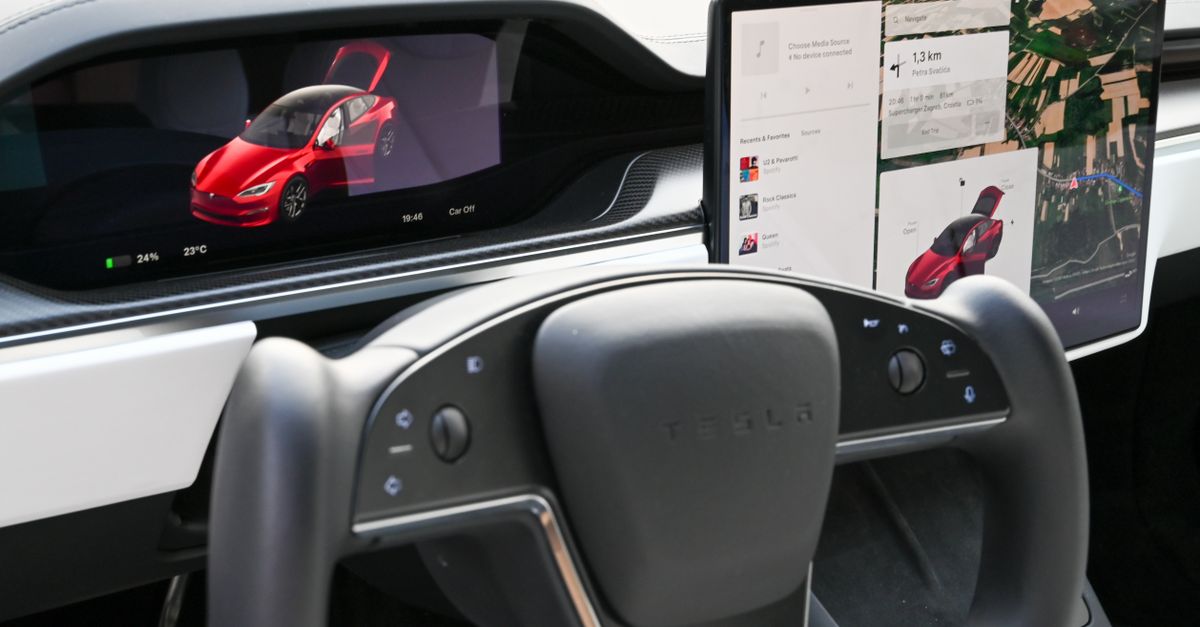
Autonomous driving technology might transform the transportation of individuals and merchandise, especially across predictable pathways. Automated cab fleets currently function within restricted zones, proving that self-sufficiency succeeds under specific circumstances rather than guaranteeing universal applicability.
By 2030, the most apparent shifts might involve broadened areas for robotaxis, self-driving shuttles operating along set paths, and transport vans servicing communities or academic campuses. Such offerings have the potential to enhance transportation accessibility for non-drivers while simultaneously streamlining specific logistical tasks.
Handling unusual weather, unexpected road hazards, emergency scenarios, and intricate interactions with human drivers continues to pose significant challenges. Municipalities will likewise be forced to determine how self-driving cars integrate into existing public transit systems. Greater convenience behind the wheel does not inherently translate to reduced congestion.
4. Gene editing
Gene editing allows researchers to make targeted changes to DNA. Its most immediate human benefit is treating diseases caused by well-understood genetic problems. In 2023, the United States approved the first treatment using CRISPR gene editing for sickle cell disease, a milestone after years of research.
By 2030, supplementary therapies might assist individuals suffering from genetic blood disorders, specific types of blindness, or alternative conditions responsive to precision-based interventions. Modifying cells outside the organism and subsequently reintroducing them to the patient typically proves more manageable than administering an editing agent straight into tissues.
Availability is the central challenge. Initial therapies can necessitate specialized medical centers, intricate procedures, and steep expenses. Scientific breakthroughs will offer limited societal value if individuals are unable to access or pay for treatment. Post-treatment surveillance will furthermore prove critical, as genomic alterations can induce permanent consequences.
5. Personalized and programmable medicine
Medicine is becoming better at matching a treatment to a patient’s biology. Genetic testing, tumor sequencing, improved diagnostics, and flexible production methods can help clinicians choose or design a more appropriate therapy.
Cancer care offers a practical example: testing a tumor for specific changes can identify patients more likely to benefit from a targeted drug. Researchers are also testing personalized cancer vaccines designed around features of an individual patient’s tumor. These vaccines are promising, but they are not yet routine care.
Early detection can be improved and ineffective treatments avoided through this identical trend. However, enhanced care does not automatically follow from a greater volume of data. Accurate testing, proper interpretation of outcomes, and safeguarding patients from the mishandling of confidential medical records remain essential. Looking toward 2030, the most significant advancements are likely to stem from integrating established precision instruments into standard medical practices, rather than solely creating novel ones.
6. Cleaner energy, better batteries, and smarter grids
Solar panels, wind turbines, batteries, and grid software are increasingly working as a system. Solar and wind can produce low-carbon electricity; batteries can shift some of that electricity to hours when it is needed; and grid controls can coordinate supply and demand.
The change is already substantial. According to the International Renewable Energy Agency, the global average cost of electricity from newly commissioned utility-scale solar projects fell sharply between 2010 and 2023. By 2030, continued deployment could affect electricity bills, vehicle charging, and the reliability of power during peak demand.
One practical example is a neighborhood that combines rooftop solar, home batteries, and managed electric-vehicle charging. Vehicles can charge when electricity is plentiful instead of all drawing power at the same expensive peak hour. The obstacles are not only technical: transmission lines, permitting, critical minerals, and fair access to clean-energy savings will shape the outcome.
7. Advanced chips and on-device AI
Smaller, more efficient processors are making it possible to run useful AI directly on phones, laptops, vehicles, medical devices, and industrial equipment. This is often called on-device or edge computing.
The contrast can become apparent right away. A hearing device may adapt to shifting ambient noise without transmitting audio to an offsite server. An assembly line camera might detect a flaw swiftly enough to halt equipment. A smartphone could translate speech or recap notes even when the signal is weak.
Local processing can improve speed and reduce how much personal data must leave a device, though it does not guarantee privacy. Progress also faces physical and economic limits: leading chips are expensive to design and manufacture, and power use remains a concern. By 2030, the most meaningful advance may be making capable computing efficient and affordable enough to use everywhere.
8. Spatial computing and augmented reality
Spatial computing places digital information in relation to the physical world. It includes augmented-reality glasses, mixed-reality headsets, and software that understands rooms, objects, and movement.
Its strongest early uses may be practical rather than recreational. A technician can see repair instructions aligned with a machine. A medical trainee can practice a procedure in a simulated setting. An architect can show a client the scale of a proposed design before construction begins.
Widespread everyday use remains less certain. Gadgets need to shed weight, lower costs, and offer long-lasting comfort. Furthermore, they spark concerns regarding the recording of bystanders and the gathering of granular data concerning private environments. By 2030, spatial computing could revolutionize specific professions, even if it hasn’t completely superseded the smartphone.
9. Satellite-based connectivity
New networks of low-Earth-orbit satellites are expanding internet access beyond the reach of conventional cables and cell towers. Satellite links can also provide backup communications when disasters damage ground networks.
For a remote clinic, a reliable connection can support consultations, training, and access to medical records. For a rural household, it can make online education or remote work more feasible. Direct connections between satellites and ordinary phones could eventually improve emergency messaging in areas without cellular coverage.
Satellite service is not a universal substitute for ground networks. Capacity, equipment costs, clear views of the sky, and local affordability still matter. Large satellite fleets also create challenges involving orbital debris and the night sky. The greatest benefit by 2030 may be filling coverage gaps and adding resilience where a single network is vulnerable.
10. Privacy-preserving computing
As enterprises increasingly leverage data and artificial intelligence, a pivotal concern is whether they can derive insights from sensitive information without exposing it needlessly. Techniques designed to preserve privacy involve handling data directly on an individual’s device, merging intelligence from distinct entities without aggregating their entire archives, and applying encryption protocols that safeguard information throughout specific computational tasks.
Consider hospitals that want to improve a diagnostic model using information from many locations. A privacy-preserving approach may let them share useful model updates rather than every patient record. Similar methods could help detect fraud across institutions while limiting disclosure of individual transactions.
These tools have trade-offs. Some are computationally expensive, and poor implementation can still leak information. They also cannot replace sound rules about what data should be collected in the first place. Even so, by 2030 they could make valuable digital services possible in settings where trust and confidentiality are essential.
What will determine their impact?
These technologies will reinforce one another. Advanced chips will make AI agents and robots faster. Cleaner electricity will help power growing computing demand. Better connectivity will extend digital health services. Privacy-preserving methods could make people more willing to use them.
Their advantages will not propagate automatically. An innovation transforms everyday existence only when it proves dependable, reasonably priced, widely reachable, and properly managed. Consequently, the central inquiry for 2030 might center less upon which discovery seems the most remarkable and more upon which innovations empower the highest volume of individuals to lead healthier, safer, and more productive lives.


