
Our website uses cookies to enhance and personalize your experience and to display advertisements (if any). Our website may also include third party cookies such as Google Adsense, Google Analytics, Youtube. By using the website, you consent to the use of cookies. We have updated our Privacy Policy. Please click the button to view our Privacy Policy.

Science and Technology

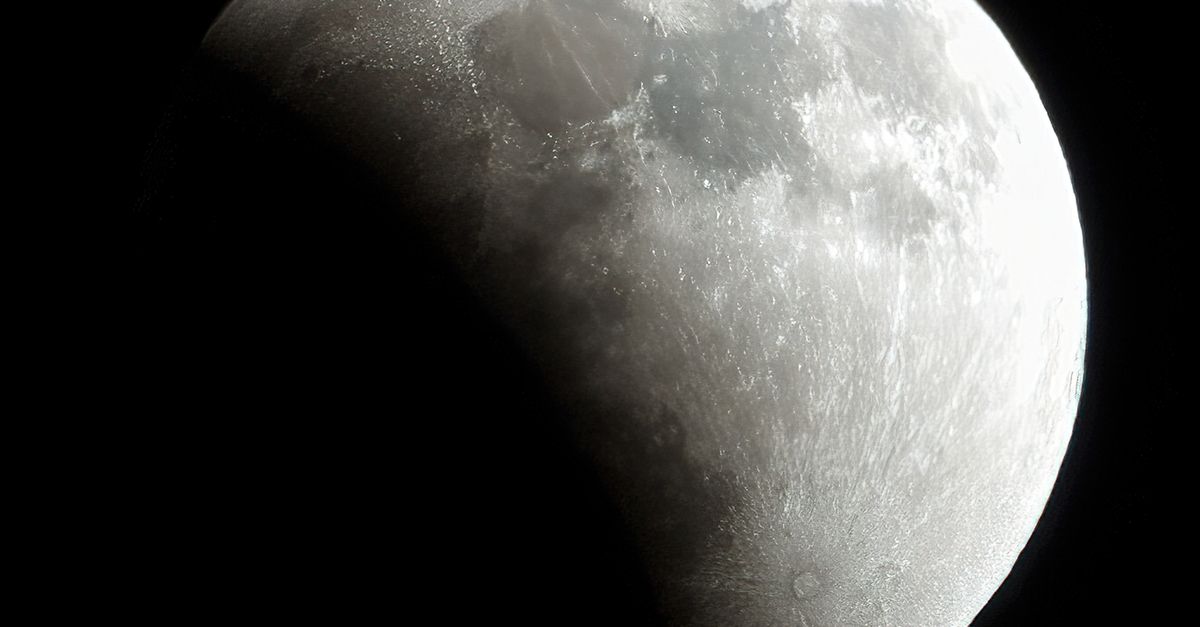
August’s sturgeon moon will share the sky with a nearly total partial lunar eclipse

August’s sturgeon moon will share the sky with a nearly total partial lunar eclipse

August’s full sturgeon moon will share the night sky with a dramatic partial lunar eclipse, as Earth’s shadow covers nearly the entire visible surface of the Moon. The celestial event will offer sky-watchers across much of the Americas an impressive opportunity to observe the changing lunar landscape.The end of August will bring more than an ordinary full moon. The annual sturgeon moon will coincide with a major partial lunar eclipse, creating one of the most striking astronomical displays of the month. Although the event will technically be classified as a partial eclipse, the Moon will come remarkably close to total…

Read more
The most hazardous volcanoes under constant observation with significant human exposure

The most hazardous volcanoes under constant observation with significant human exposure

Understanding Volcanic Risk in the Modern WorldVolcanoes rank among the most formidable natural systems on Earth. Although numerous eruptions remain moderate and are closely monitored, certain volcanoes merge high eruptive potential with heavily populated surroundings, volatile magma networks, or past records of devastating blasts. Such peaks are deemed particularly perilous, driven as much by the sheer magnitude of human exposure as by their inherent geological traits.Below are ten of the most dangerous actively monitored volcanoes on the planet, selected based on eruptive history, magma composition, explosivity, monitoring assessments, and nearby population density.1. Mount Vesuvius (Italy)Type: Stratovolcano Last major eruption: 1944…
Read more
The medical breakthrough of ether anesthesia at Massachusetts General Hospital

The medical breakthrough of ether anesthesia at Massachusetts General Hospital

1. The First Successful Use of Ether Anesthesia (1846)Before the mid-nineteenth century, surgery was a brutal, last-resort intervention performed at lightning speed to minimize agony. On October 16, 1846, at Massachusetts General Hospital, dentist William T. G. Morton publicly demonstrated the use of ether anesthesia during the removal of a neck tumor. The patient reportedly felt no pain.This single operation transformed medicine. Surgeons could now operate deliberately rather than desperately. Mortality rates dropped as procedures became more precise, and entirely new specialties—such as abdominal and thoracic surgery—emerged. Modern anesthesiology, patient monitoring systems, and critical care medicine trace their origins to…
Read more
The most powerful vaccines that changed human health forever

The most powerful vaccines that changed human health forever

Introduction: Vaccines as the Greatest Life-Saving InnovationVaccination is widely regarded as one of the most powerful public health achievements in human history. By training the immune system to recognize and fight infectious agents before exposure, vaccines have prevented countless illnesses, disabilities, and deaths. According to the World Health Organization, immunization currently prevents 4–5 million deaths every year. The following twelve vaccines stand out for the extraordinary number of lives they have saved, transforming global health and reshaping life expectancy across continents.1. Smallpox VaccineEstimated impact: More than 200 million lives saved throughout the 20th century exclusively.Smallpox was once one of humanity’s…
Read more
Why improving extreme-weather forecasting is crucial in a warming climate

Why improving extreme-weather forecasting is crucial in a warming climate

Why Severe-Weather Forecasting Matters More Than EverExtreme weather events like heat waves, floods, hurricanes, wildfires, and droughts are growing more frequent and intense as the climate warms. Saving lives, safeguarding infrastructure, and directing emergency responses depend heavily on precise and prompt forecasts. Driven by breakthroughs in climate models and an explosion in satellite data, forecasting capabilities have advanced significantly over the last twenty years. Combined, these instruments are reshaping the way scientists spot, anticipate, and convey the dangers of severe weather.Modern Climate Models: From Coarse Averages to Fine DetailClimate models act as computer simulations designed to capture the physical, chemical,…
Read more
Why photonic computing is key to future computing scalability

Why photonic computing is key to future computing scalability

The computing industry is approaching physical and economic limits that traditional electronic technologies struggle to overcome. As data volumes explode, artificial intelligence workloads intensify, and energy efficiency becomes a central concern, photonic computing and optical interconnects are moving from research labs into commercial roadmaps. Their appeal lies in a simple but powerful idea: using light instead of electrons to process and move information.The Boundaries of Traditional Electronic ComputingFor decades, progress in computing followed predictable scaling trends, with smaller transistors delivering higher performance and lower cost. That trajectory has slowed due to several constraints:Power density and heat: Modern chips dissipate enormous…
Read more
FODMAP: when it helps and how to avoid deficiencies

How FODMAPs affect water retention and fermentation in the colon

What FODMAPs are and why they matterFODMAPs are short-chain carbohydrates that can be poorly absorbed in the small intestine and then fermented by bacteria in the colon. The acronym stands for fermentable oligosaccharides, disaccharides, monosaccharides and polyols. When these molecules reach the colon, they attract water and are rapidly fermented, which can cause gas, bloating, abdominal pain and altered bowel habits in susceptible people.When a low FODMAP approach helpsIrritable bowel syndrome (IBS): Robust clinical data indicates that a low FODMAP diet is particularly effective at alleviating IBS manifestations. Controlled trials alongside comprehensive meta-analyses document relief in roughly half to three-quarters…
Read more
The 8 Most Toxic Minerals and Compounds Known

Understanding the 8 most toxic minerals and compounds with long-lasting impact on human health

Introduction: Understanding Extreme ToxicityThroughout history, specific minerals and chemical compounds have proven extraordinarily toxic, capable of triggering severe illness or death even upon minimal exposure. While toxicity depends on dosage, route of entry, and duration, certain substances remain inherently perilous due to their biochemical reactivity, bodily persistence, or capacity to disrupt essential cellular functions. Presented below are eight exceptionally lethal minerals and compounds, chosen for their deadliness, historical significance, and well-documented health impacts.1. ArsenicArsenic is a naturally occurring metalloid found in soil, groundwater, and certain minerals. It exists in both organic and inorganic forms, with inorganic arsenic compounds being far…
Read more
The 12 Scientific Experiments That Changed 20th Century Physics

How interferometry in the Michelson–Morley experiment changed physics

1. The Michelson–Morley Experiment (1887)Although conducted at the end of the nineteenth century, the Michelson–Morley experiment set the stage for twentieth-century physics. Albert A. Michelson and Edward W. Morley attempted to detect the “luminiferous ether,” the hypothetical medium through which light waves were believed to travel. Using an interferometer capable of detecting shifts as small as a fraction of a wavelength of light, they compared the speed of light in perpendicular directions as Earth moved through space.The anticipated displacement of interference fringes failed to materialize. This null outcome weakened the ether theory and directly shaped Albert Einstein’s 1905 development of…
Read more
How are perovskite solar cells moving closer to commercial scale?

What challenges must perovskite solar cells overcome to reach commercial scale?

Perovskite solar cells are a class of photovoltaic devices that use a perovskite-structured material as the light-absorbing layer. Over the past decade, they have moved from laboratory curiosities to serious contenders in the global solar market. Their appeal lies in a combination of high power conversion efficiency, low manufacturing cost, and design flexibility. Laboratory efficiencies have climbed rapidly, from below 4 percent in the early 2010s to over 26 percent in single-junction cells and above 33 percent in tandem configurations when combined with silicon.This rapid pace of advancement is totally unprecedented within the solar energy sector, sparking immense curiosity amongst…
Read more