

Table of Contents
Since its release in 2016, ‘La La Land’, directed by Damien Chazelle, has occupied a unique space in the evolution of the musical genre. Its modern reinterpretation, aesthetic choices, and cultural impact have been extensively discussed by critics, filmmakers, and audiences alike. Yet, what precisely did ‘La La Land’ contribute to the contemporary musical repertoire? The answers are multifaceted, spanning narrative innovation, technical revival, and a reevaluation of cinematic nostalgia.
Reimagining the Traditional Structure with a Contemporary Perspective
Musicals have long thrived on grand spectacle, vibrant choreography, and emotionally charged storytelling. However, before ‘La La Land’, the American film industry experienced a lull in large-scale, original musicals, with adaptations and Disney animations dominating the scene. Chazelle’s vision drew explicitly from the Golden Age of Hollywood, referencing works such as ‘Singin’ in the Rain’ and ‘The Umbrellas of Cherbourg,’ yet grounded the narrative in the tangible struggles of twenty-first century dreamers.
By threading Mia and Sebastian’s ambitions with contemporary realities—financial instability, career uncertainty, and the tension between dreams and practicality—the film anchored timeless themes in an authentic context. The contrast between hyperreal musical numbers, such as the opening freeway sequence ‘Another Day of Sun’, and the grounded, bittersweet development of the central relationship, reinvigorated the genre without ignoring present-day sensibilities.
Filmic Artistry: Hue, Melody, and Movement
‘La La Land‘ distinguished itself through a meticulous fusion of visual and auditory artistry. Cinematographer Linus Sandgren’s use of color palettes was not mere homage but a deliberate psychological tool. Vivid hues in costumes and set design often mirrored emotional peaks or transitions, echoing the expressive capabilities of color in classic musicals while delivering a fresh impact to contemporary audiences.
Composer Justin Hurwitz’s score played a central role in shaping the film’s identity. Unlike many modern musicals that favor diegetic or pop-inspired numbers, ‘La La Land’ embraced original compositions loosely tethered to jazz. The recurring motif of jazz, both thematically and structurally, brought an improvisational spirit to the film and reminded viewers of the transformative nature of music itself. Numbers like ‘City of Stars’ achieved cultural ubiquity, crossing into mainstream radio, and earned multiple awards, including the Academy Award for Best Original Song.
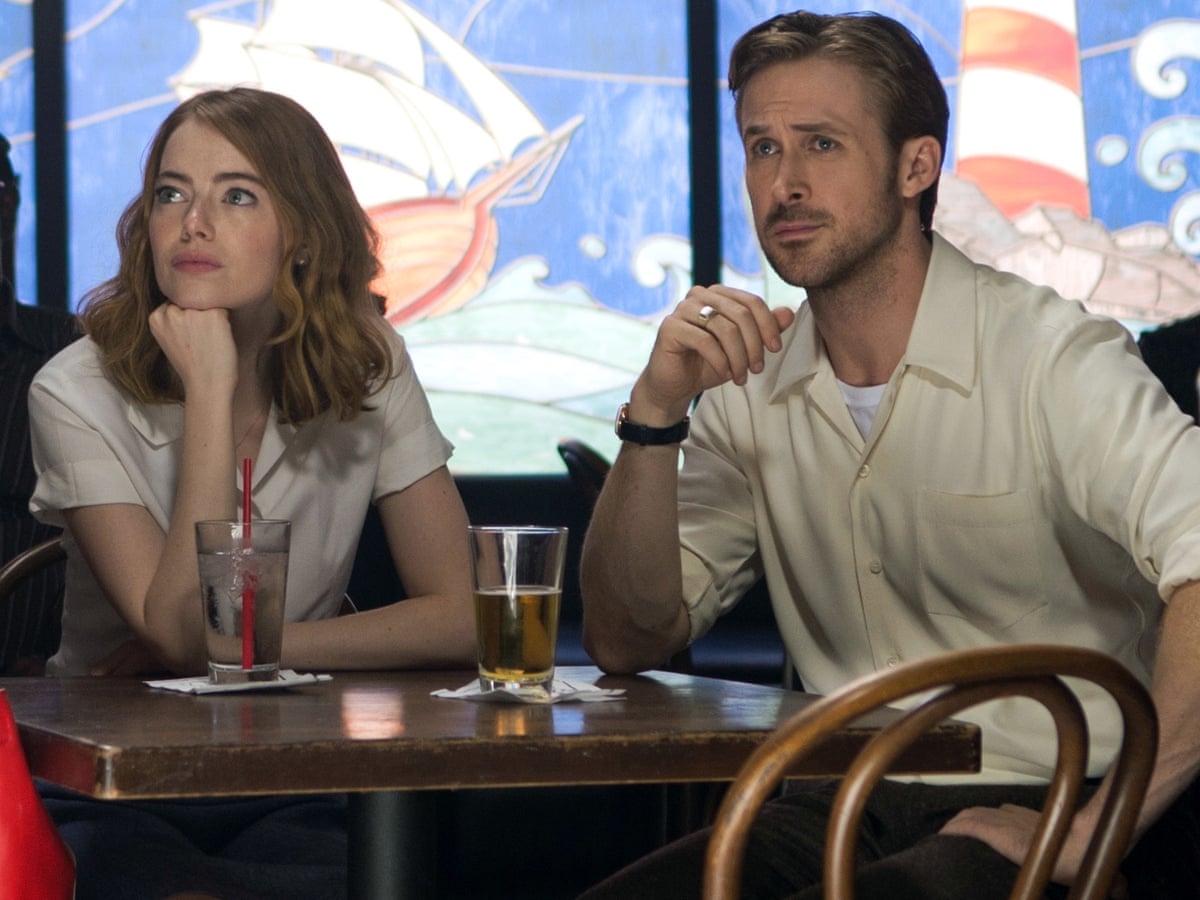
The dance sequences, conceived by Mandy Moore, moved away from overly refined flawlessness, instead embracing movement that was expressive and driven by character. Ryan Gosling and Emma Stone, neither of whom were renowned for their musical theater experience, presented portrayals rooted in genuine emotion and sincerity. This approach broadened the appeal of the musical genre, implying that sincere delivery could be more impactful than technical skill.
Narrative Subversion and Realism
Audiences conditioned by classical musicals might expect a conclusive, optimistic ending. ‘La La Land’ purposefully subverted this convention. The film’s final act, often referenced as ‘the epilogue,’ offered viewers both a dreamlike, alternative reality montage and the present-day outcome, where aspirations are realized at the cost of the romantic relationship. This duality resonated with a modern audience accustomed to complexity and nuance, suggesting that adult life often demands sacrifice rather than the perfect alignment of love and ambition.
Furthermore, the movie’s introspection redefined the musical category as both an homage and an examination. With Sebastian’s yearning for a bygone jazz period and Mia’s developing perception of celebrity, ‘La La Land’ scrutinized the sentimentality often idealized in musicals, subtly prompting audiences to reevaluate the consequences of holding onto history.
Audience Reception, Legacy, and the Broader Musical Revival
The global response to ‘La La Land’ underscored an appetite for musical narratives outside the superhero or franchise template. Grossing nearly $450 million worldwide on a $30 million budget, and garnering fourteen Academy Award nominations, the film demonstrated clear commercial and critical viability for original musicals in the twenty-first century. Its success notably preceded a resurgence of musical films and television, including ‘The Greatest Showman,’ ‘A Star is Born’ (2018 remake), and live television adaptations of Broadway classics.
The movie also rekindled widespread fascination with jazz music, the city of Los Angeles depicted as a central figure, and the recurring theme of an artist’s personal odyssey—indicating that viewers continued to crave sophisticated realism and profound emotional release.
Lasting Impact and Fresh Benchmarks for the Category
Analysis of post-‘La La Land’ musicals reveals measurable influence across both independent and studio-backed projects. Directors and composers cite its blending of visual bravura and narrative honesty as a touchstone. The film’s soundtrack, with its jazz-inflected motifs, fueled a renewed appreciation for original scores in mainstream cinema.
Perhaps ‘La La Land’s’ most significant contribution is its validation of the modern musical’s capacity to blend homage with innovation. It empowered creators to experiment boldly within the genre while honoring its deep-rooted traditions. By refusing to stale into pastiche, and favoring an honest portrayal of dreams achieved and lost, the film reminded viewers and filmmakers alike that musicals are not only vessels for escapism but also for sincere human stories—complex, imperfect, and resonant with contemporary realities. Such a model endures, inviting each new generation to reimagine what a musical can be and whom it can reach.


