

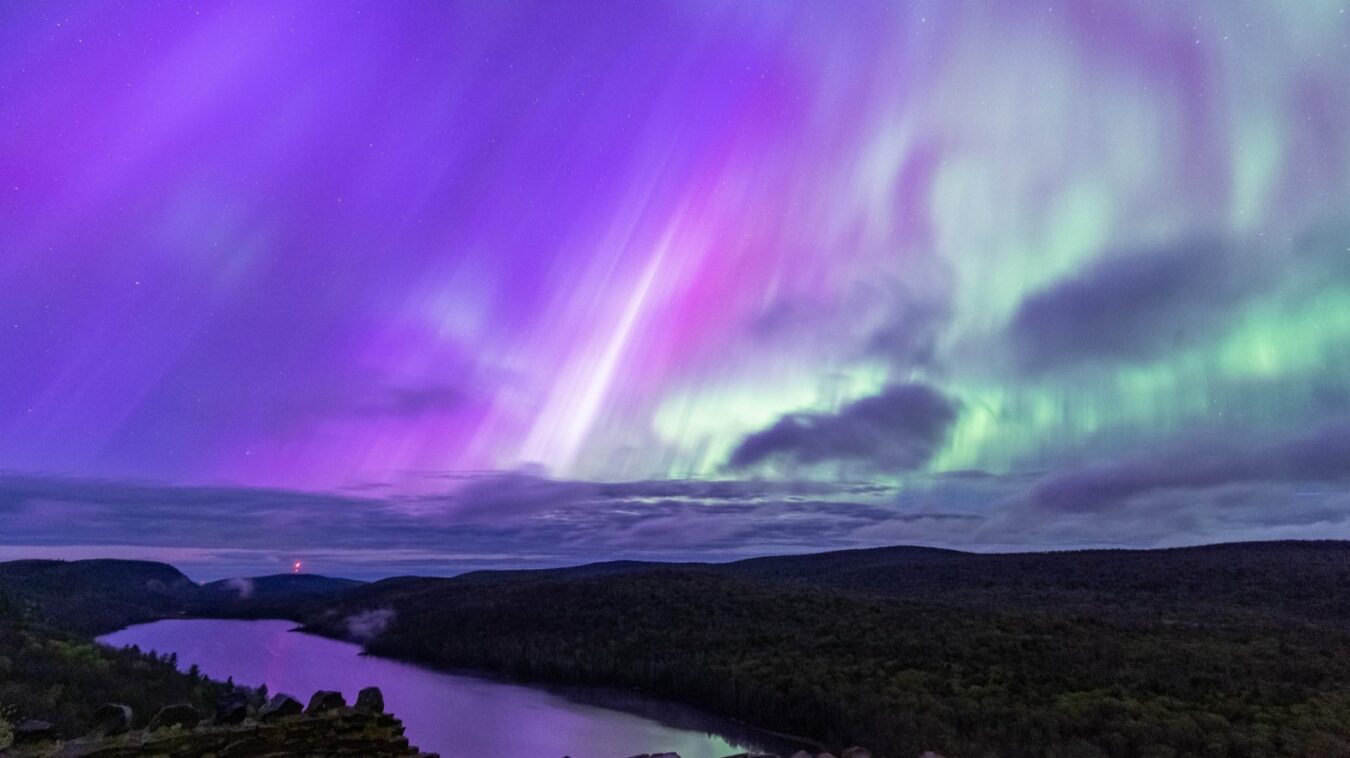
The northern lights, or aurora borealis, usually appear in areas near the Arctic Circle, lighting up skies in regions such as Alaska, Canada, and Scandinavia. However, during periods of heightened solar activity, these mesmerizing displays can be seen much farther south. Current predictions suggest that this storm could allow residents in parts of the central and even southern United States to witness the shimmering green, pink, and purple lights that are typically reserved for polar skies.
This unusual visibility is linked to an increase in solar activity, specifically a large release of charged particles from the Sun. When these particles collide with Earth’s magnetic field, they create the colorful glow we associate with auroras. The stronger the solar storm, the farther toward the equator these lights can travel. This upcoming storm ranks high on the geomagnetic scale, indicating the possibility of a widespread auroral display if skies remain clear.
The origin of the event lies in a coronal mass ejection (CME), a massive burst of solar plasma and magnetic fields launched from the Sun’s surface. When these ejections are directed toward Earth, they can disrupt not only the atmosphere but also critical technologies. Past events have shown that strong geomagnetic storms can interfere with satellite communications, GPS systems, and even power grids. While scientists do not anticipate catastrophic damage from this particular storm, utility companies and satellite operators have been alerted to take precautionary measures.
Experts at the National Oceanic and Atmospheric Administration (NOAA) have issued alerts to both amateur skywatchers and industry professionals. They advise that the peak time for auroral activity will likely occur within 24 to 48 hours of the CME’s arrival. Regions such as the Midwest, the Great Plains, and possibly parts of the southern states like Texas and Oklahoma could be treated to a rare celestial spectacle. For many people, this may be a once-in-a-lifetime opportunity to view the aurora without traveling thousands of miles north.
The optimal method to witness this spectacle is to venture out to a location far from the illumination of urban areas. The brightness from cities greatly diminishes the visibility of auroras, making countryside spots the best for unobstructed views. Viewers should gaze towards the northern skyline at night, especially close to midnight when the geomagnetic activity is usually at its highest. Being patient is essential, as the shows can fluctuate in strength and length based on atmospheric conditions and how the solar wind interacts with Earth’s magnetic field.
Auroras occur when electrons and protons from the Sun interact with oxygen and nitrogen in the upper atmosphere. These collisions produce bursts of energy that manifest as vibrant colors dancing across the sky. Green is the most common color, resulting from oxygen molecules about 60 miles above Earth, while red and purple tones appear at higher altitudes. This interplay of colors is not only a visual marvel but also a fascinating scientific process that highlights the delicate balance between solar forces and our planet’s magnetic shield.
Although this occasion is sparking enthusiasm among astronomy enthusiasts, it also highlights the significance of monitoring space weather. Researchers observe solar storms due to their capability to interfere with crucial infrastructure. In 1989, a severe geomagnetic storm led to a nine-hour blackout in Quebec, leaving millions without power. Even though current power networks and technological systems are more robust, the increasing dependence on satellites for communication and navigation renders modern society especially susceptible to space weather.
In addition to power outages, solar storms can endanger astronauts on the International Space Station. High-energy particles can raise radiation levels, leading NASA and other space organizations to implement safety measures during intense occurrences. Airlines operating on polar routes might modify their flight paths to reduce exposure and prevent communication disruptions. These measures demonstrate the interdependence between our technological systems and the Sun’s activity, even though it is almost 93 million miles distant.
For photographers and astronomy enthusiasts, this storm represents a golden opportunity to capture breathtaking images of the night sky. Social media is already buzzing with anticipation, as users plan trips to dark-sky locations to document the event. Experts recommend using cameras with manual settings and long exposures to photograph the aurora effectively. Tripods and wide-angle lenses can help produce sharp, dramatic shots of the glowing horizon. For those unable to travel, live streams and community-shared photos will likely circulate widely online in the aftermath of the storm.
Looking ahead, scientists expect solar activity to continue increasing over the next few years as the Sun approaches the peak of its current solar cycle. This means similar events could become more frequent, though not every solar storm will produce auroras visible so far south. For now, this particular geomagnetic storm stands out as one of the most significant in recent memory, offering both beauty and a reminder of our planet’s vulnerability to solar forces.
As the storm approaches, experts urge the public to remain informed through official channels such as NOAA’s Space Weather Prediction Center. These agencies provide real-time updates on geomagnetic conditions, aurora forecasts, and potential impacts on technology. For those fortunate enough to witness the northern lights during this rare occurrence, it will serve as a stunning example of nature’s power and elegance—a cosmic performance unfolding high above our heads.
From a scientific standpoint, solar storms provide important insights into the connection between the Sun and Earth, assisting scientists in improving forecasting models. Comprehending the formation and expansion of these storms is vital for protecting infrastructure and planning upcoming space explorations. Every occurrence adds to an expanding collection of knowledge that helps society be more equipped for the next significant solar eruption.
When conditions are favorable, the skies over vast areas of the United States might light up with shades of green and red, enchanting millions and reminding us of our role in the immense solar system. This phenomenon is not just a treat for the eyes but an experience that brings people together, encouraging them to step outside and witness nature’s incredible light display.


