

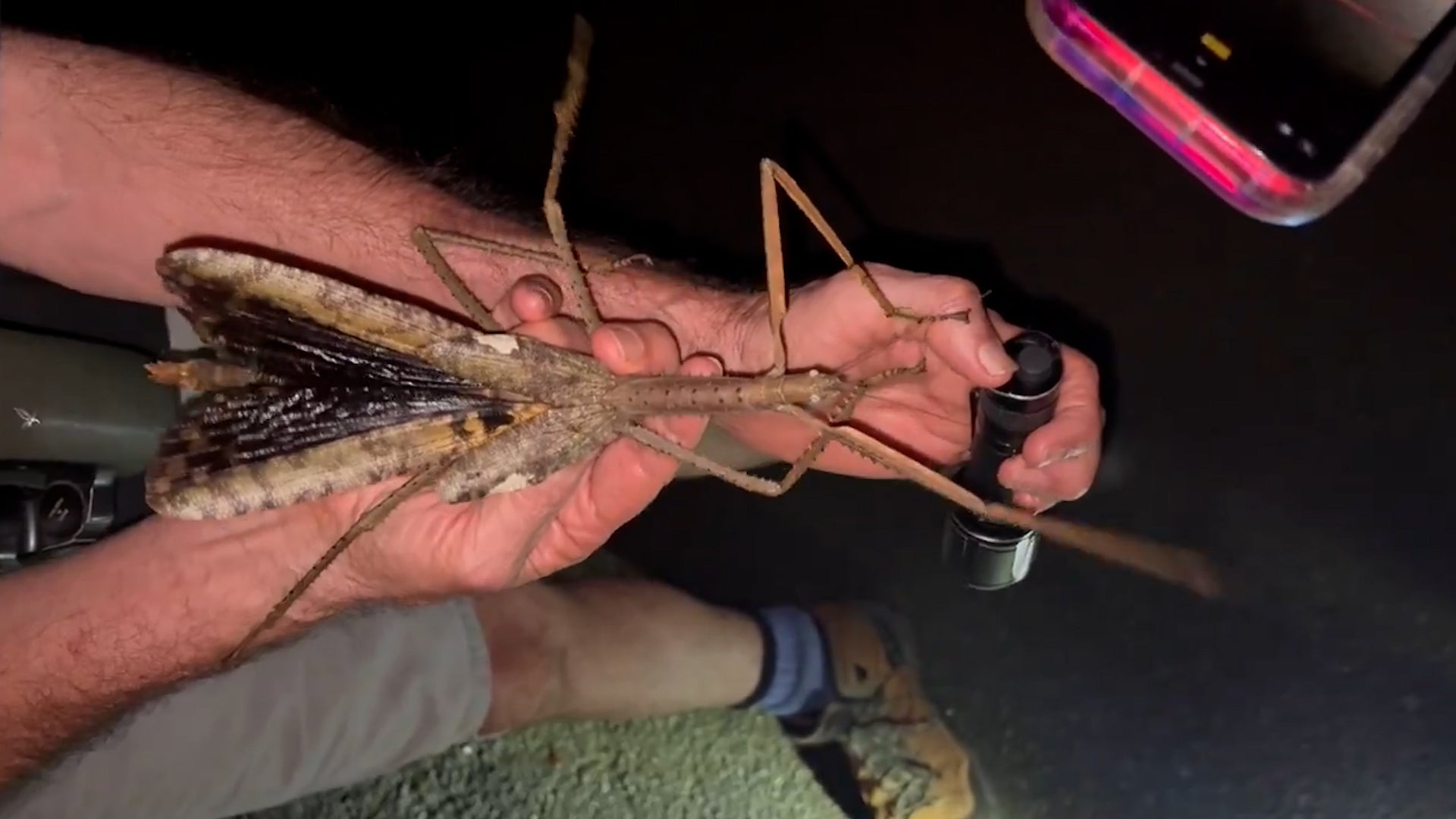
Researchers have uncovered a new species of stick insect that is notable for its unexpected heaviness compared to its generally light counterparts. This extraordinary insect, found on an expedition through a Southeast Asian jungle, has a weight comparable to that of a typical golf ball, positioning it as one of the heaviest recorded members of the stick insect group.
The newly documented insect displays several unusual physical characteristics that distinguish it from other phasmids. While most stick insects evolved slender, lightweight bodies to enhance their camouflage among twigs and leaves, this species developed a thicker, more robust physique. Entomologists believe its unique body structure may represent an evolutionary adaptation to specific environmental conditions in its isolated habitat.
Biologists in the field initially observed the insect because of its unique way of moving. In contrast to the usual stick insects, which tend to stay still for a long time, this species moves with intentional and deliberate movements that led scientists to initially confuse it for a tiny reptile in the forest floor vegetation. Its unique marbled exoskeleton in shades of brown and green offers excellent disguise against the tree bark covered in lichen within its natural habitat.
The discovery occurred during a biodiversity survey in a remote mountainous region known for its high number of endemic species. Scientists spent weeks tracking and observing several specimens to document their behavior, diet, and life cycle. Preliminary findings suggest the insects feed primarily on the leaves of particular tree species that grow abundantly in the area’s unique microclimate.
What captures the interest of scientists about this stick insect is its method of reproduction. Although numerous stick insects are capable of asexual reproduction via parthenogenesis, this newly identified species seems to necessitate mating between males and females. This feature, along with its restricted geographic distribution, renders the population particularly susceptible to changes in the environment.
The significant mass of the insect in comparison to its body size—equivalent to the weight of a golf ball in a body that measures 25 centimeters long—raises intriguing questions regarding its physiological and biomechanical attributes. Scientists are especially interested in understanding how the musculature accommodates this atypical weight dispersion and how the exoskeleton retains its strength while remaining flexible.
Conservation biologists have already begun discussing protection measures for the species, as its highly specialized habitat makes it susceptible to deforestation and climate change impacts. The discovery site lies in a region experiencing increasing development pressure, raising concerns about preserving the delicate ecosystem this insect depends on for survival.
The investigative team applied cutting-edge imaging methods to examine the interior anatomy of the insect without causing harm to the specimens. Micro-CT imaging unveiled specialized digestive features that could aid in digesting its specific diet, as well as alterations in the respiratory system that seem to be unique among identified phasmid species.
Behavioral observations documented complex social interactions not typically seen in stick insects. The creatures appear to communicate through subtle vibrations transmitted through the branches they inhabit, suggesting a more sophisticated social structure than their relatives exhibit. Researchers recorded distinct patterns that may serve as warning signals or mating calls.
Taxonomists are actively engaged in categorizing the species within the phasmid lineage. Genetic research indicates that it branched out from its known relatives millions of years in the past, representing what scientists describe as a “living fossil” that retains ancient traits lost by other branches. This renders the discovery especially significant for comprehending the evolution of stick insects.
The scientific team plans to continue studying the insects in their natural habitat while establishing a captive breeding program to ensure the species’ survival. They emphasize the importance of preserving the entire ecosystem rather than focusing solely on this charismatic new species, as its survival depends on the complex web of relationships in its forest home.
This discovery highlights how much remains unknown about Earth’s biodiversity, even among relatively well-studied insect groups. Researchers estimate that thousands of arthropod species await discovery in tropical forests worldwide, many potentially holding clues to evolutionary mysteries or possessing unique biological traits.
For environmentalists, the large stick insect represents the marvels of the natural world and highlights the delicate nature of specialized ecosystems. Its restricted habitat and specific needs make it perfect for assessing the environmental condition in its indigenous area. By safeguarding its environment, numerous undiscovered species inhabiting the same forest could be conserved.
The investigation group intends to release comprehensive results in future scientific publications while collaborating with regional communities to create sustainable conservation plans. They aim for this remarkable new creature to captivate the public’s interest and highlight the significance of protecting biodiversity-rich areas around the globe.
As scientists continue to analyze specimens and data, they anticipate making additional discoveries about this remarkable insect’s biology and ecology. Each new finding promises to expand our understanding of evolutionary adaptation and the incredible diversity of life forms sharing our planet. The golf ball-weight stick insect stands as a testament to nature’s endless capacity for surprise and innovation.


