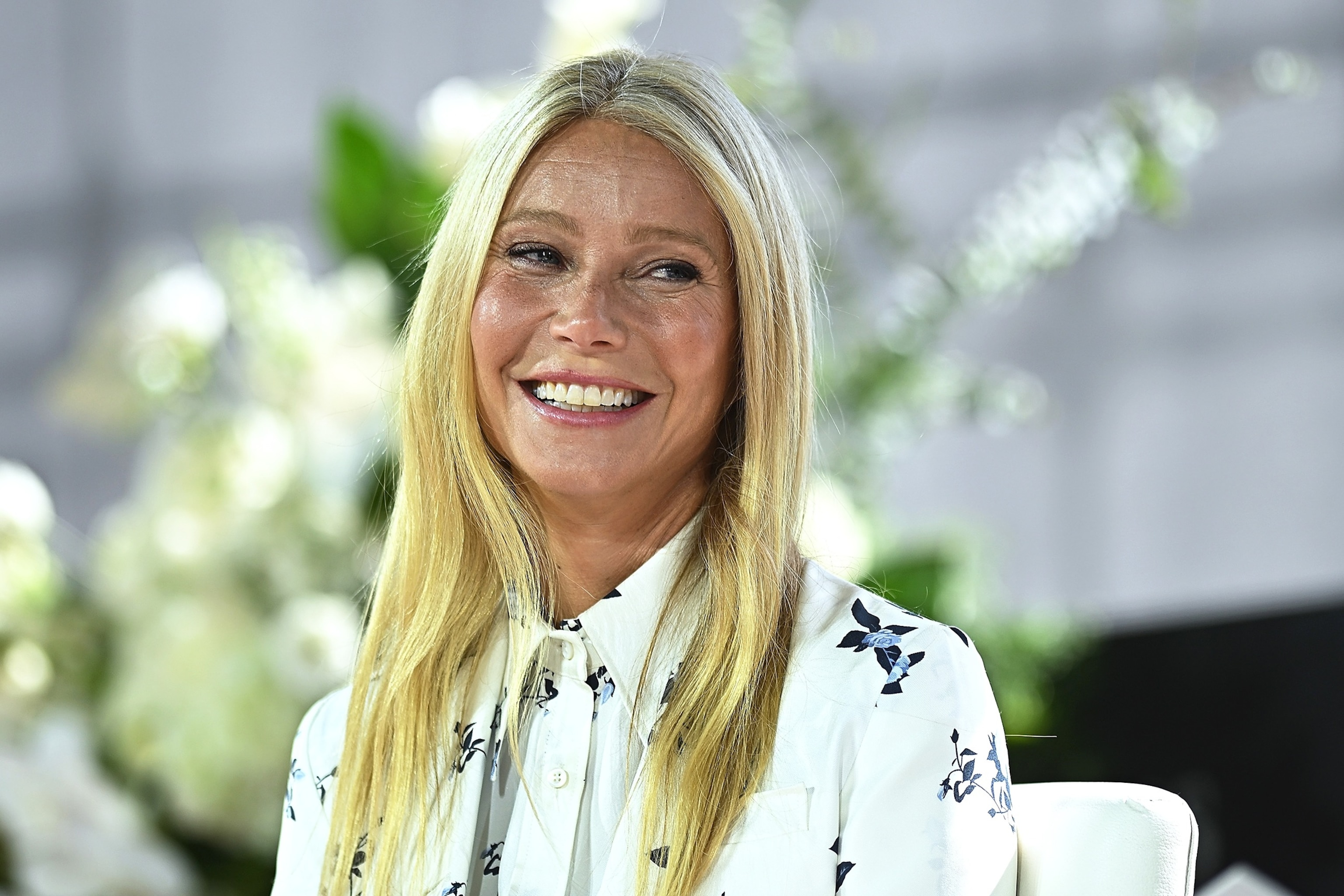
Gwyneth Paltrow’s professional journey has evolved significantly, shifting from an Academy Award-winning performer to a leader in the wellness industry, making her one of the prominent subjects in today’s celebrity media landscape. Her journey diverged from the conventional Hollywood fame trajectory and didn’t conform to societal norms. Rather, Paltrow has crafted a public persona that is undeniably multifaceted—sincere, with a touch of irony, and entirely confident. Regardless of whether she receives acclaim or critique, she remains a prominent figure in the collective consciousness.
Since her initial ascent to prominence in the 1990s with performances in movies such as Emma and Shakespeare in Love, Paltrow carved out a reputation as a talented actress with an elegant demeanor. Achieving an Academy Award in her twenties, she swiftly became linked with a particular brand of elite sophistication that both captivated and distanced viewers. However, it didn’t take long for her to start moving away from the traditional roles that had first outlined her professional path.
By the start of the 2000s, her on-screen roles became less frequent, aligning with her shift towards family priorities and subsequently, her venture into the wellness business. This transition—particularly her establishment of Goop in 2008—turned Paltrow from a Hollywood star into a topic of cultural discussion. Goop, which began as a lifestyle newsletter, has evolved into a company worth millions, providing everything from skincare products to wellness tips, frequently balancing between creativity and debate.
Much of the public fascination with Paltrow stems from this duality: her ability to appear completely sincere while promoting ideas that many see as fringe or elitist. Her suggestions—like using jade eggs for vaginal health or selling candles labeled with provocative names—have sparked both mockery and intrigue. Critics often question the scientific validity of her wellness claims, while supporters praise her for challenging traditional norms and offering alternatives that resonate with many, particularly women seeking autonomy over their health and bodies.
At the core of her brand is a kind of cultivated irreverence. Paltrow seems well aware of the ridicule some of her statements attract, and yet she rarely retreats or apologizes. Instead, she leans into the contradictions, mixing self-deprecating humor with sharp confidence. Her interviews often feature moments that blur the lines between satire and sincerity, making it difficult to tell when she’s being tongue-in-cheek and when she’s being completely genuine.
This quality has turned her into a lightning rod for commentary. Some see her as a savvy businesswoman who has effectively leveraged her fame to build a successful brand. Others view her as out of touch, a representative of a privileged elite detached from the realities of everyday life. Still, regardless of the perspective, she manages to remain a topic of conversation—a testament to her enduring influence.
Part of what makes Paltrow’s public persona so resilient is her refusal to conform. In a culture that often demands likability, she seems comfortable being disliked. She does not appear overly concerned with appeasing critics or adjusting her message to fit a broader audience. This defiance, while polarizing, has become central to her appeal. She represents a type of modern femininity that is both aspirational and controversial—one that prioritizes self-expression, self-care, and, above all, self-determination.
Her impact also mirrors larger changes in society. The wellness sector has seen significant growth in recent years, driven by increasing skepticism towards traditional medicine and a demand for more comprehensive, individualized health solutions. Paltrow’s brand has influenced and been influenced by this movement. She has contributed to the rise in popularity of non-traditional health practices, despite being under examination by medical experts and researchers. This has emphasized the conflicts between conventional healthcare and new wellness concepts.
Moreover, her foray into wellness entrepreneurship has opened the door for conversations about the commodification of self-care. Critics argue that many of her products cater to an elite demographic, positioning well-being as something to be purchased rather than practiced. Yet, others contend that she is simply reflecting the realities of a market-driven culture, offering products that speak to a specific lifestyle and worldview.
Despite the debates surrounding her, Paltrow’s cultural relevance shows no signs of waning. She continues to appear in select acting roles, often portraying characters who mirror aspects of her real-life persona—poised, enigmatic, and fiercely independent. She also remains active in interviews, social media, and public appearances, always maintaining a voice that is distinctively hers.
Perhaps what is most striking about Paltrow is her refusal to be easily categorized. She is neither entirely serious nor fully satirical; neither wholly embraced nor completely dismissed. Her legacy is not just tied to her film career or her wellness empire, but to her role in challenging the boundaries of celebrity itself. She invites audiences to grapple with discomfort, to question norms, and to reconsider what authenticity means in a world saturated with curated images and personas.
In a time when public personalities are frequently expected to conform to neat stories, Paltrow distinguishes herself. She provides no such simplicity—just a portrayal of herself that continuously transforms, is unapologetically intricate, and open to various interpretations. Regardless of whether she is viewed as a pioneer or a controversial figure, her capacity to stimulate thinking, discussion, and, crucially, self-reflection on the roles women are anticipated to fulfill in public arenas remains unquestionable.
As public discourse continues to evolve, so too will the way Paltrow is perceived. But her legacy as a figure who challenged expectations—both her own and society’s—is already well established. In remaining true to herself, she has carved out a space that is uniquely her own, one that continues to captivate, confuse, and inspire.